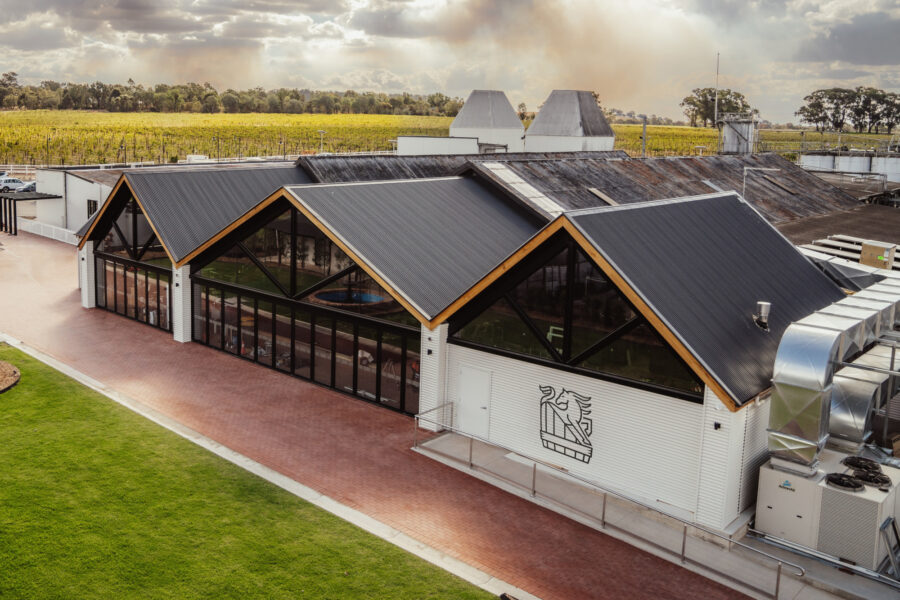
Morris of Rutherglen is one of the region’s emblematic wine estates with over 150 years of winemaking. Established in 1859, it was in private ownership for over 100 years before it was taken over in 1970 and then increasingly unloved and undercapitalised by Pernod Ricard until it was released from purgatory in 2016. The sorry story of Morris under corporate ownership is a masterclass in how averageness and lack of imagination can trump ambition and talent while diminishing potential. When John Casella of Yellow Tail fame acquired Morris Winery in 2016, it had been shuttered and virtually mothballed, despite previous overtures to purchase the estate. It took some deft behind the scenes negotiations by winemaker David Morris to push the deal through. ‘A lot of discreet maneuvering’ was required including financing the deal through David Morris’s bank account. This perhaps gives an inkling towards the longstanding relationship between the Casella and Morris families which goes back to 1965.
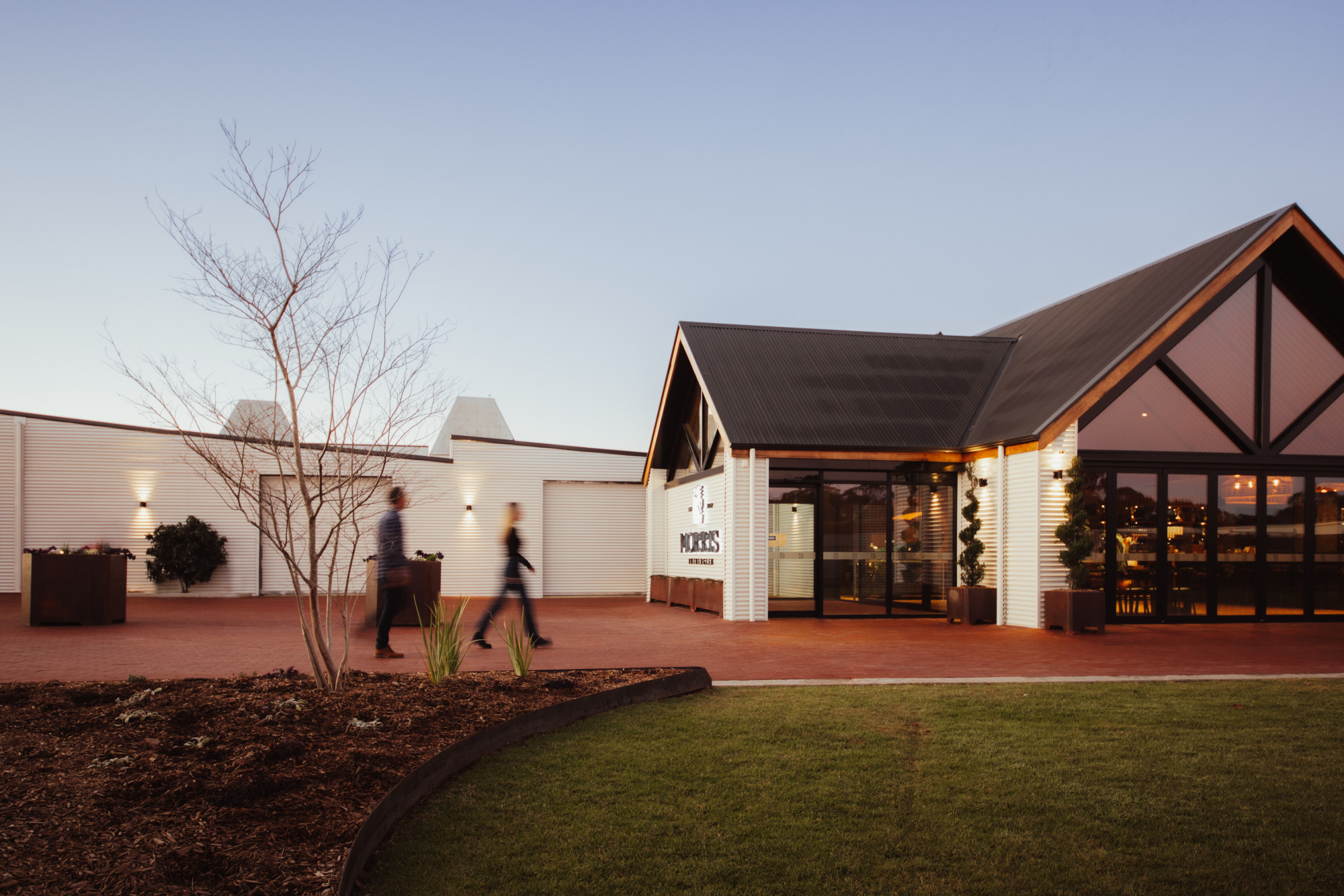
Now back in private hands Morris of Rutherglen is well and truly back on track with a flourishing whisky business based on a 1933 copper-still (installed in 1941 and previously used for producing fortifying spirit) and a reinvigorated wine culture. While its reputation is linked to its wonderful rare tawnies, muscats and topaques (muscadelle), the business has been transformed by the Casella Family into a model of imaginative drinks entrepreneurship in Australia. Morris of Rutherglen is now a ‘wine and whisky brand” and a significant regional tourist destination; all the while highlighting its historic contribution to the Australian wine industry.
… all the while highlighting its historic contribution to the Australian wine industry.
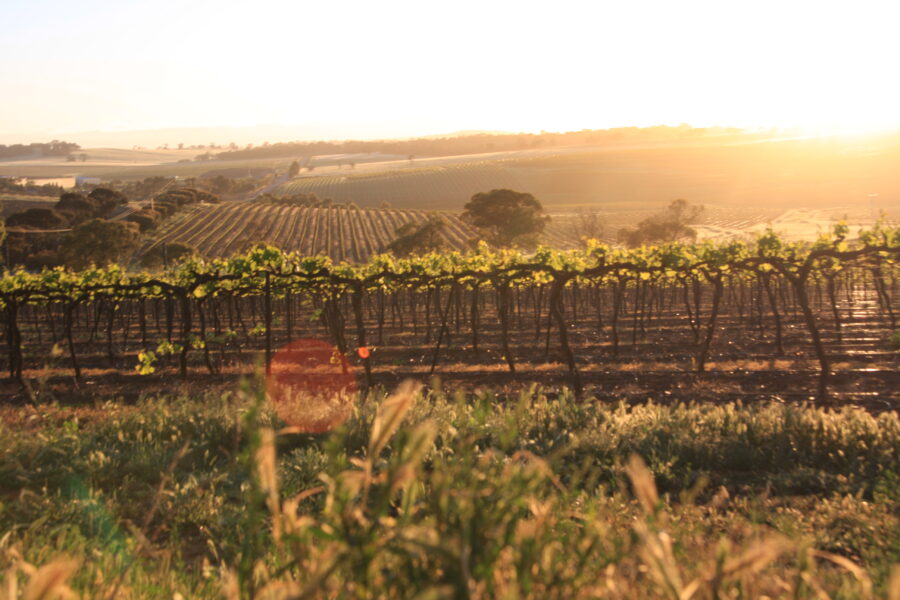
A driveway into the winery, dissects the historic Mia Mia Vineyard which sprawls, dips and rises, across gentle slopes. The entrance is just a few hundred meters from defunct winery buildings from the late 1800s. Like all vineyards in Rutherglen, the original mid 19th Century Mia Mia Vineyard plantings were gradually destroyed by the dreaded phylloxera pest during the last days of colonial Victoria. Although many vignerons tried various ways of saving their vines, including fumigation, none of these methods worked resulting in the wholesale removal of vineyards in the region during the early 1900s. It had a massive impact on wine trade especially for the export red wine business which had brought great riches to Rutherglen. In a 2008 speech, Charles Henry ‘Mick’ Morris said ‘At this time much of our wine was being exported to England as Australian Burgundy – full, rich, flavoursome dry red wines made from fully ripened grapes which suited the English palate with their cold climate, unlike the skinnier, acidic French vin ordinaire wines.’
Nonetheless a draconian remedy had been found but it would require vignerons to pull up their vineyards and replant with grapevines grafted on American rootstocks. In 1907 Francois de Castella, the Victorian State Viticulturalist (and one of the greatest wine industry figures of the time) was sent to Europe to investigate and collect new vinestock material to reconstitute phylloxera-affected regions, especially Rutherglen. On his return in 1908, he brought back 60,000 vines, mainly of the ‘sherry varieties’ but also several table grape varieties including cabernet sauvignon, grenache and the little-known grape variety durif (a late 19th Century cross between peloursin and shiraz ), also known as petit sirah (as opposed to petite syrah).
According to ‘Mick’ Morris, his father (Charles Tempest Morris) planted ungrafted cuttings of durif and other varieties at the newly acquired (but 15kms distant) Sandhills Vineyard, which comprised abundant sandy soils that would prove resistant to phylloxera. But in 1920, after the end of the First World War, new grafted rootlings, probably at the recommendation of Francois de Castella, were planted extensively at the Mia Mia Vineyard site including two seven acre blocks of durif. And one of these blocks still survive. The decision to plant durif may have been linked to an 1918 outbreak of downy mildew in Victoria’s northeast which destroyed much of the harvest. Its apparent tolerance to the disease combined with its potential to produce wines of ‘rich, ripe flavoursome fruit character’, must have had some commercial appeal.

By the 1920s, the Rutherglen region had returned to full wine production although fortified winemaking would soon supersede the bulk export red wine trade, now based primarily on mondeuse and shiraz. At Morris, the durif grapes were used entirely for tawny production, until 1954 when Mick Morris released a Morris Bin 158 Claret (which was based on the variety). Morris of Rutherglen and a local winery Gayfers at Chiltern were the only places where durif was grown at this time. But the growth of the boutique Australian red wine scene during the 1960s and 1970s, led to more plantings taking place in the region.
Morris of Rutherglen Durif has been a house specialty since the 1950s and enjoys a loyal following. According to David Morris ’the wine’s deep colour, rich fruit, soft tannins and exceptional aging ability’ make durif one of Australia’s most distinctive varietal wines. While durif will probably remain primarily a specialty of the Rutherglen region, it is also grown in New South Wales and the Barossa Valley. But the reference for this variety is Morris of Rutherglen. Despite the challenges of the past century, durif has been championed by four generations of the Morris family. Semi-retired David Morris and his winemaker son Madden ‘continue that story of family commitment.’
Morris CHM Durif, which commemorates and recognises the decadal efforts of Charles Henry ‘Mick’ Morris, highlights the singularity of this house style. With its ample fruit, vigorous structure and buoyant mid-palate, the wines are generous and impactful. The most recent releases profoundly outclass the more commercial and ‘oaky’ durif bottlings, which are clearly made for a particular audience.
While John Casella is best known for the massively successful Yellow Tail brand, Casella Family Brands has been premiumising its portfolio for some time now reflecting a trend towards fine wine. With a culture of ‘staying close to our roots’ and ‘never chasing fashion’ it has shown a deliberate strategy to build a meaningful fine wine story behind its premium brands, Peter Lehmann, Brand’s Laira, Bailey’s of Glenrowan and Morris of Rutherglen. While I am sure Yellow Tail will continue on its merry way, the principles surrounding its diversification into brewing and spirits, are also steeped in a philosophy in circularity and sustainability from both a business can community perspective.
While durif is not the mainstay of Morris of Rutherglen, the survival of the variety and its storied history runs in parallel to the challenges of winemaking in Rutherglen over the last century. A recent tasting of vintages of Morris of Rutherglen CHM Durif highlights the intrinsic versatility and quality of the variety. Although there is work to be done in building a genuine fine wine constituency for durif, the historical background is fascinating. It is also a great thing that Morris of Rutherglen is back in family hands. This must have been a relief for Charles Henry ‘Mick’ Morris who greatly contributed to story and reputation of the region throughout his lifetime. He recently passed away having just reached his 98th Birthday. It was only some weeks ago we toasted this milestone with a glass of 1928 Morris of Rutherglen Muscat, a beautiful reminder of Rutherglen’s unique place in the world of fine wine.
… a beautiful reminder of Rutherglen’s unique place in the world of fine wine.
2024 Morris CHM Durif, Rutherglen – Victoria
Deep colour. Fragrant musky dark cherry, chinotto aromas with some malty / cedar notes. Generous, supple and chocolaty with ample dark and blue berry fruits, lovely mid-palate volume, underlying cedar notes, sinuous gravelly tannins and well-integrated acidity. Very good density and flow. Should develop well. Drink now – 2034 14.5% alc 95 points
2021 Morris CHM Durif, Rutherglen – Victoria
Deep colour. Fragrant chinotto, blackberry pastille, black cherry dark chocolate, hint graphite aromas. Inky deep with ample blackberry, black cherry, praline, chinotto flavours, firm light gravelly/ chocolaty tannins and underlying roasted walnut, roasted chestnut notes. A slight ferruginous twang at the finish lengthens the palate. A lovely wine that evokes yesteryear as much as being fresh and modern in style. Drink now – 2035 13.5% 94 points
2013 Morris CHM Durif, Rutherglen – Victoria
Deep colour. Fresh inky blueberry, black cherry aromas. Slinky textured, but slightly soupy with blue and black berry fruits, a touch of demi-glace and long gravelly, touch ferruginous/ graphite tannins. Finishes claret firm. Drink now – 2032 94 points
2007 Morris CHM Durif, Rutherglen – Victoria
Deep colour. Praline, black berry, cedar aromas with cola notes. Richly concentrated and developed with choco-berry fruits, looseknit/ muscular tannins, ample mid-palate volume a and underlying savoury notes. A touch cedary/ grippy at the finish. Still possesses freshness density and fruit sweetness. Drink now – in a while 15% alc 92 points